
The foundation of USPSA is built on a simple, powerful idea: The shooter matters more than the equipment. That idea did not come from a marketing plan or a governing body. It came from a group of shooters who believed the sport could be more dynamic, more realistic and more meaningful.
In 1976, at the Columbia Conference, that idea became a framework. Under the leadership of Jeff Cooper and others who shared his vision, practical shooting was defined by three principles: accuracy, power and speed. Those were not just metrics. They were a philosophy, a way to measure performance that required balance, discipline and intent. Diligentia, Vis, Celeritas.
From those early days, the sport evolved quickly. What began as a small, passionate community grew into USPSA, now representing tens of thousands of members and thousands of matches every year across the country. As the United States region of the International Practical Shooting Confederation, USPSA is part of a global network, but it has maintained something uniquely its own: a culture rooted in innovation, accessibility and constant progression.
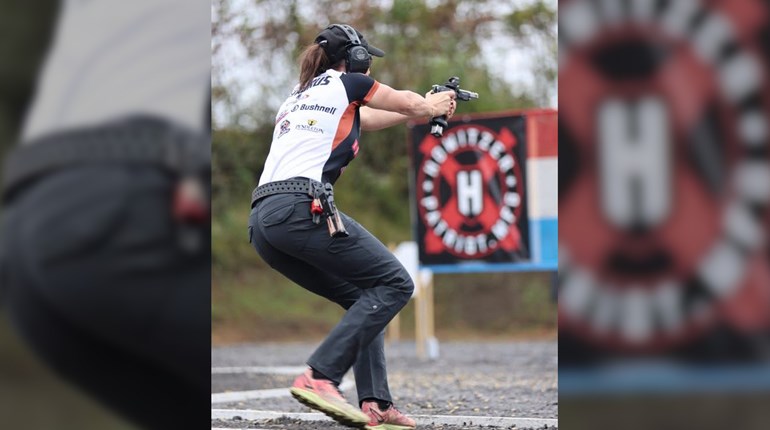
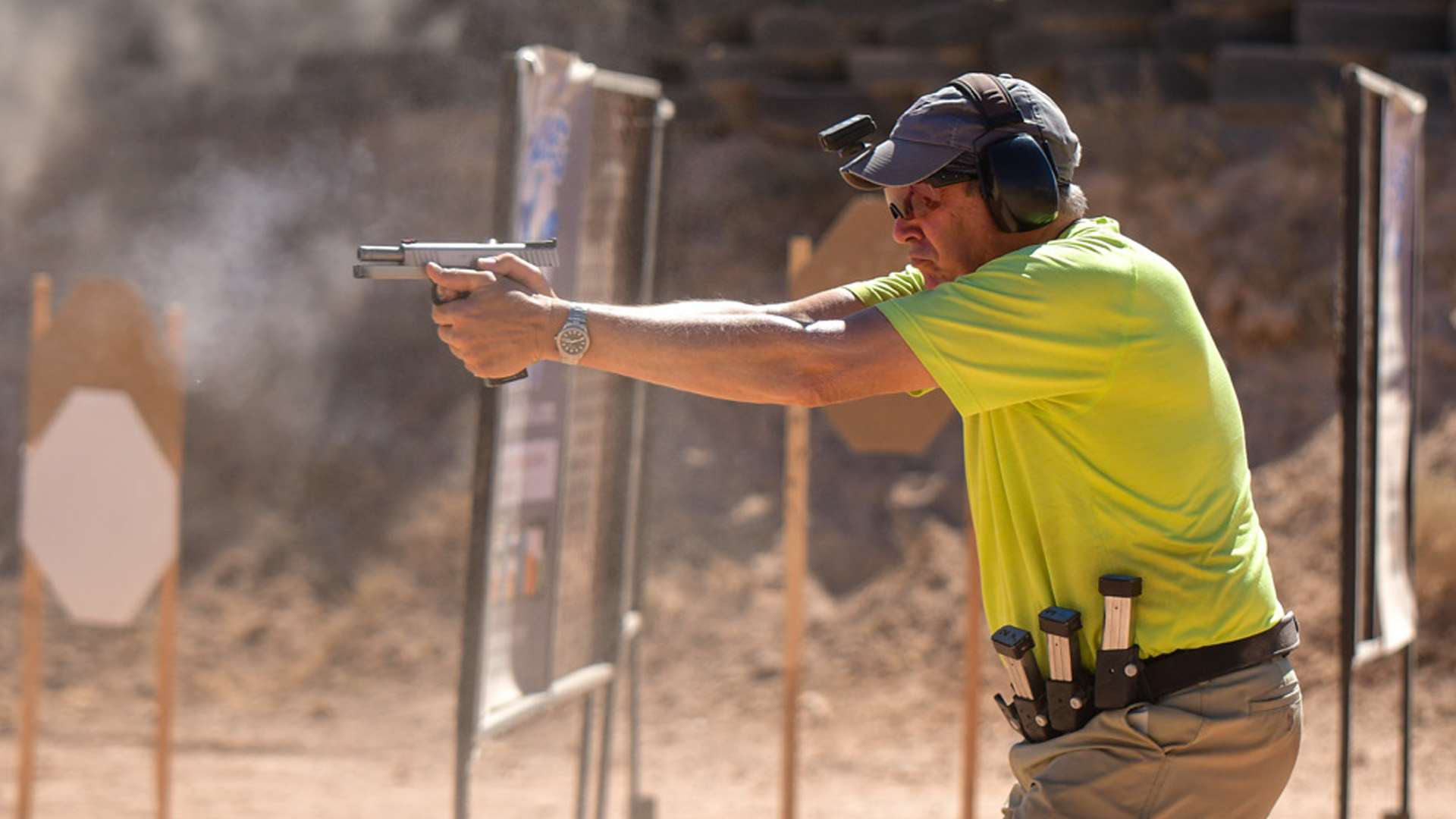
What separates USPSA from traditional shooting disciplines is movement and decision-making. This is not a static sport. You are not standing still, waiting for the perfect sight picture. You are solving problems in real time. Every stage presents a different challenge, a different set of options and a different path to success. There is no single right way to shoot a stage, only the way you choose and the way you execute.
You step to the line with a plan, but the execution is yours alone. Footwork, transitions, target engagement order, risk versus reward, it all happens in seconds. And when the timer starts, there are no second guesses. There is only performance.
That is where USPSA lives, in that space between preparation and execution.
Over time, the sport has continued to evolve. Equipment divisions have expanded. Participation has grown. Technology has improved how matches are run and how performance is measured. But the core has not changed. USPSA is still a test of the individual, a balance of skill, discipline and decision making under pressure.
From local club matches where new shooters take their first shots on the clock to the USPSA National Championships, where the best in the sport compete at the highest level, the experience is connected by a shared standard: a respect for the process. A commitment to improvement. A recognition that every run, every stage and every match is an opportunity to get better.
USPSA is not just a shooting sport. It is a proving ground.
WHY WE DO IT
There is a moment before every run.
It is quiet, even when the range is not. You are standing there, going through the plan one more time. Visualizing movement. Seeing the targets. Feeling the transitions. You know what you want to do. You know how it should look.
Then the timer goes off.
That moment is why we do it.
It is the immediate shift from thought to action. The demand for focus. The awareness that everything you have worked on, every rep, every dry-fire session, every match before this one, is about to be tested in a matter of seconds.
There is nothing passive about it. USPSA demands engagement. It demands commitment. It demands that you show up, mentally and physically, and execute.
And when it works, when everything lines up and the run flows the way you saw it, there is nothing else like it. The movement feels effortless. The gun tracks exactly where it should. The transitions are clean. The plan becomes reality.
That feeling stays with you.
And when it does not go that way, when you miss, when you hesitate, when you realize halfway through that something is off, that stays with you, too. Not as failure, but as motivation. As something to figure out. As a reason to come back.
We chase improvement because it is always just out of reach. There is always something to refine. A better way to move. A smoother reload. A more efficient plan. The ceiling keeps moving, and that is what makes it worth pursuing.
But the draw of USPSA is not just individual performance.
It is the people.
It is the squad you shoot with. The conversations between stages. The shared understanding of what just happened on that run. The laughter after something goes sideways. The respect when someone puts together a performance that stands out.
It is experienced shooters taking the time to help someone new. It is families spending time together at the range. It is friendships built over years of showing up, competing and improving together.
This is a competitive environment, but it is not isolated. You are measured individually, but you are surrounded by people who want to see you succeed, who will push you, challenge you and support you at the same time.
There is a rhythm to it. Early mornings loading gear. Walking stages. Talking through plans. Waiting your turn. Running the stage. Resetting. Moving to the next one. It is a full day, and it never feels like a burden.
Because it is fun.
That word matters. In the middle of all the focus, all the discipline, all the effort to improve, there is enjoyment. There is a reason people look forward to match day. There is a reason they drive hours to get there. There is a reason they come back again and again.
USPSA gives you a place to test yourself, to push your limits and to measure progress in a way that is immediate and honest. At the same time, it gives you a community that shares that mindset, that understands the effort and that values the process.
And through all of it, there is one constant that makes everything else possible: safety. It is not negotiable. It is not secondary. It is the standard that defines how we operate, how we compete and how we grow.
That balance of challenge, community, improvement and safety is why we do it.
WHY IT MATTERS TO GIVE BACK
There is a side of USPSA that every competitor sees, and there is a side that makes it possible.
Matches do not just happen. They are built.
Every stage starts as an idea. Then it becomes a design. Then it becomes lumber, fault lines, target stands, steel, walls and movement paths laid out on a bay. It takes time. It takes effort. It takes people who are willing to show up before anyone else arrives.
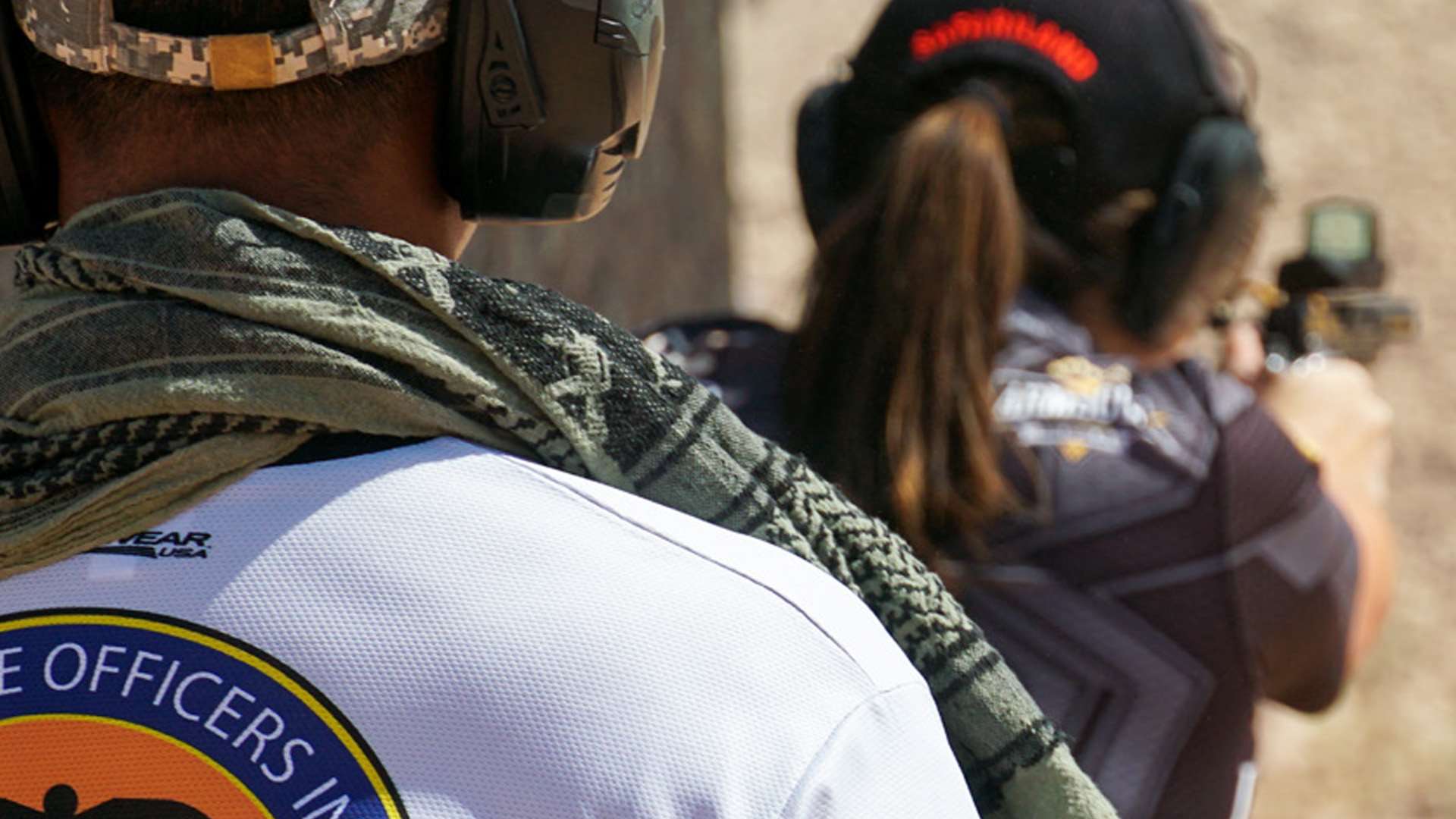
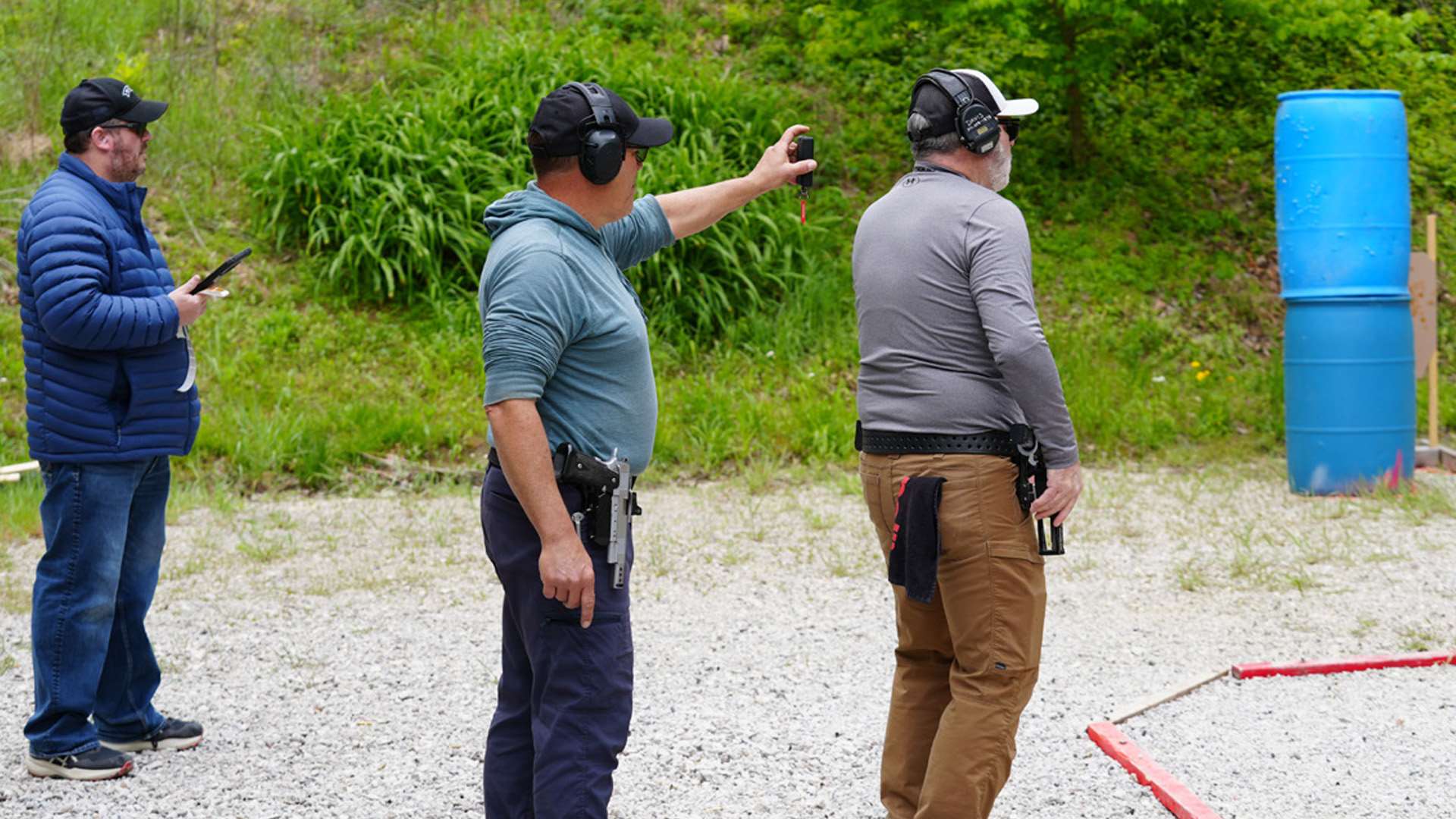
Range Officers (ROs) are there before the first shot and long after the last one. They are responsible for more than running a timer: They are the standard bearers of safety. They ensure consistency. They apply the rules fairly. They create the environment where every competitor can focus on performance, knowing the structure around them is solid.
Volunteers reset targets, tape holes, paint steel and keep the match moving. Match Directors coordinate everything behind the scenes: logistics, staffing, scheduling and communication. It is a system that works because people commit to it.
Giving back is how the sport sustains itself.
It is easy to show up, shoot and leave. It is different to stay and help tear down. To ask what needs to be done. To take ownership of part of the process and contribute to making it better.
Being an RO is one of the most impactful ways to give back. It places you at the center of the action and makes you responsible for safety, for fairness and for maintaining the integrity of the sport. It requires attention, consistency and professionalism. And it sets the tone for everyone on the range.
Building stages is another level of contribution. It shapes the experience of every competitor who steps into that bay. A well-built stage challenges, rewards and pushes shooters to think. It becomes part of how they remember the match. Helping set up a stage and hang targets is making sure everything is ready for the first shots that day.
Mentoring new shooters matters. Taking the time to explain the process, to walk them through their first stage, to answer questions, that is how the sport grows. That is how the next group of competitors becomes part of the community.
And beyond the range, there is a larger responsibility.
USPSA represents the firearms community in a very real way. Every action, every interaction, every standard we uphold reflects on the broader perception of what responsible gun ownership looks like. That means leading by example. Demonstrating safe handling. Showing discipline. Encouraging personal responsibility and continuous skill development.
We are not just participants. We are representatives.
The future of USPSA depends on more than participation numbers. It depends on engagement. On people who are willing to invest their time, their effort and their energy into building something that lasts.
We honor where the sport came from by continuing to build it.
We justify why we do it by how we approach it.
We secure where it is going by what we give back to it.
That is the responsibility.
That is the opportunity.
That is USPSA.
Article from the May/June 2026 issue of USPSA’s magazine.