WARNING: All technical data in this publication, especially for handloading, reflect the limited experience of individuals using specific tools, products, equipment and components under specific conditions and circumstances not necessarily reported in the article and over which the National Rifle Association (NRA) has no control. The data has not otherwise been tested or verified by the NRA. The NRA, its agents, officers and employees accept no responsibility for the results obtained by persons using such data and disclaim all liability for any consequential injuries or damages.
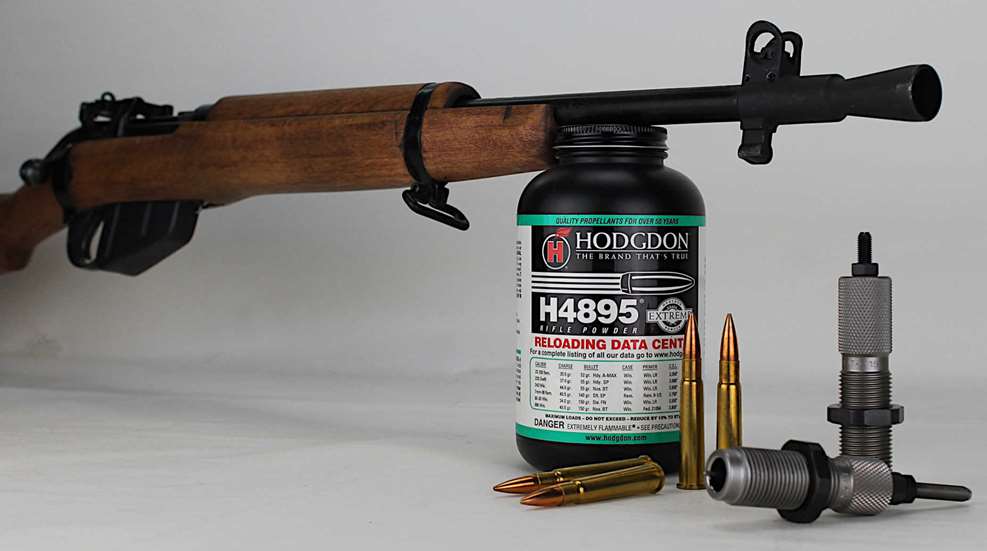
Anyone who has fired an Enfield “jungle carbine” can tell you that its bark is considerably increased by that shortened barrel, and so is its recoil bite, from deliberately lightening the rifle and slimming the recoil pad. But reduced loads using Hodgdon’s H4895 and its “60-percent rule” can tame that bark and bite.
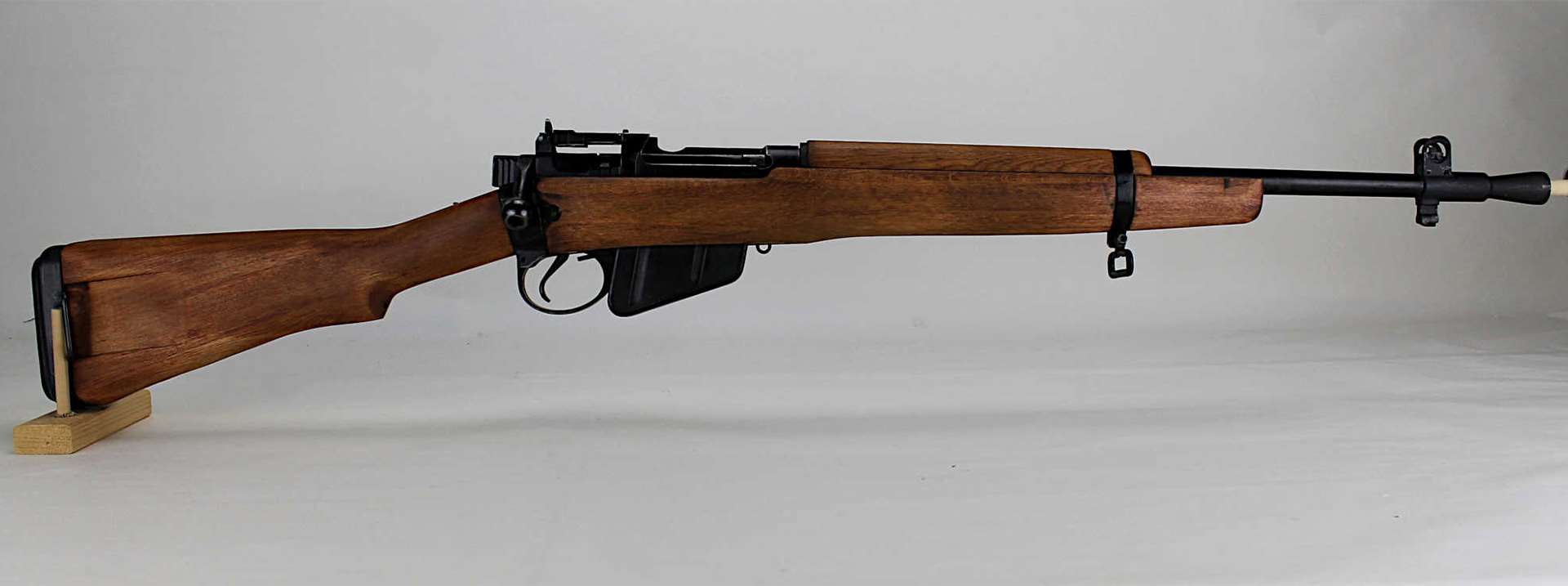
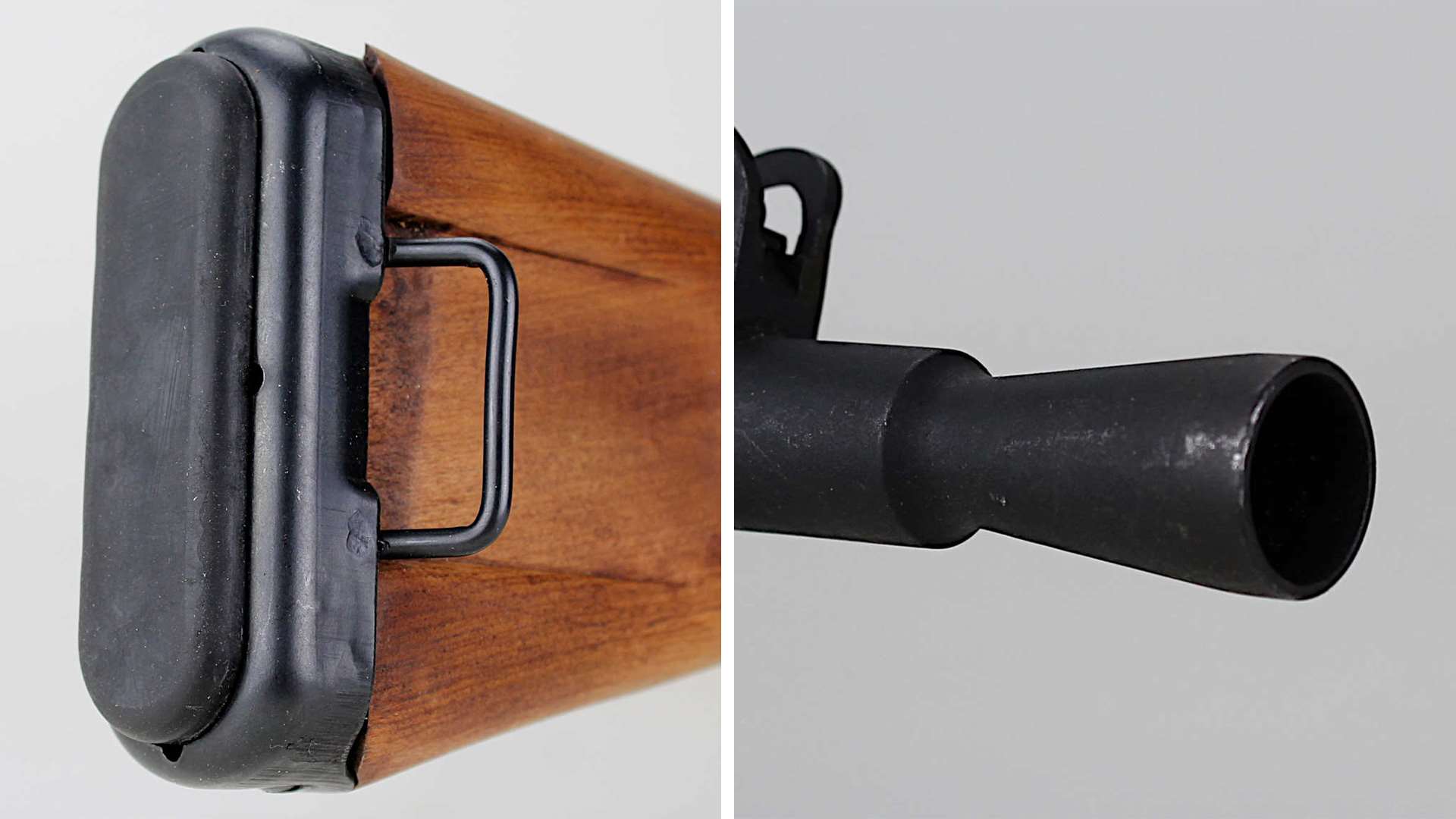
Derived by lopping four inches from the barrel of a No. 4 Mk. I Enfield and by trimming two pounds from the original nine-pound rifle, the intent of the No. 5 Mk. II Enfield—“jungle carbine” was never an official designation—was to fill a need for a lighter, handier rifle for World War II jungle fighting. Shortening the barrel, removing some receiver metal, hollowing the bolt handle and cutting back some of the wood all helped to lighten the rifle’s weight. The flash hider probably does as much to direct the increased muzzle blast forward, away from the shooter, as it does to hide flash in a dim jungle. Because less rifle mass means more recoil with a given cartridge, re-designers added a rubber recoil pad. Unfortunately, the pad is narrower than the Enfield’s standard steel butt plate, delivering recoil to a smaller area and thus effectively increasing the perceived recoil—about four pounds more recoil than a heavier, full-size No. 4 Mk. I rifle.
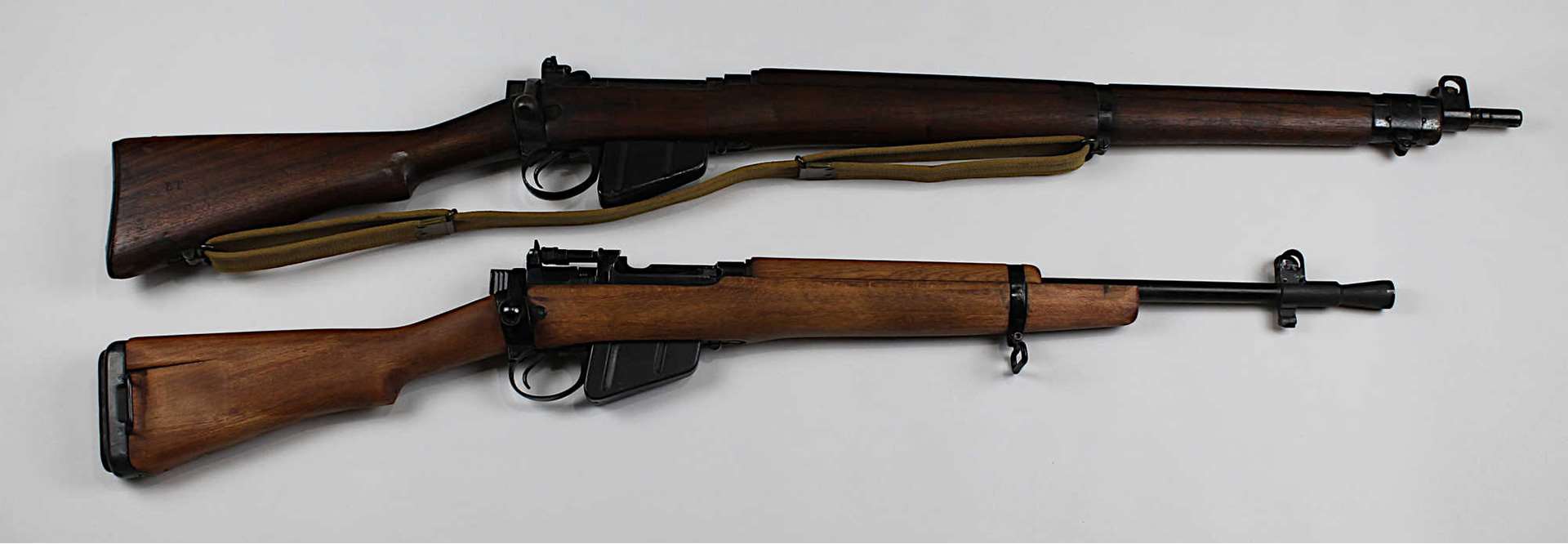
MILITARY VS. COMMERCIAL JUNGLE CARBINES
All No. 5 Mk. I Enfields came from Royal Ordnance Factory Fazakerley (Liverpool) and Birmingham Small Arms Shirley (Birmingham). BSA Shirley produced 81,329 of the rifles; Fazakerley made 169,807, for a total of 251,368 No. 5 Mk. I rifles. Production ran from March 1944 to December 1947. A large number of commercial so-called “Jungle Carbines” were produced in the United States in the 1950s-1960s by altering milsurp No. 4 and No. 1 Enfield rifles. The practice revived in the 1990s when Indian Ishapore 2A1 rifles—No. 1 Mk. III* Enfield rifles chambered in 7.62x51 mm NATO and generally referred to as “Ishapore Enfields”—became available as milsurp; these latter commercial variants were marketed as the “#7 Jungle Carbine.”
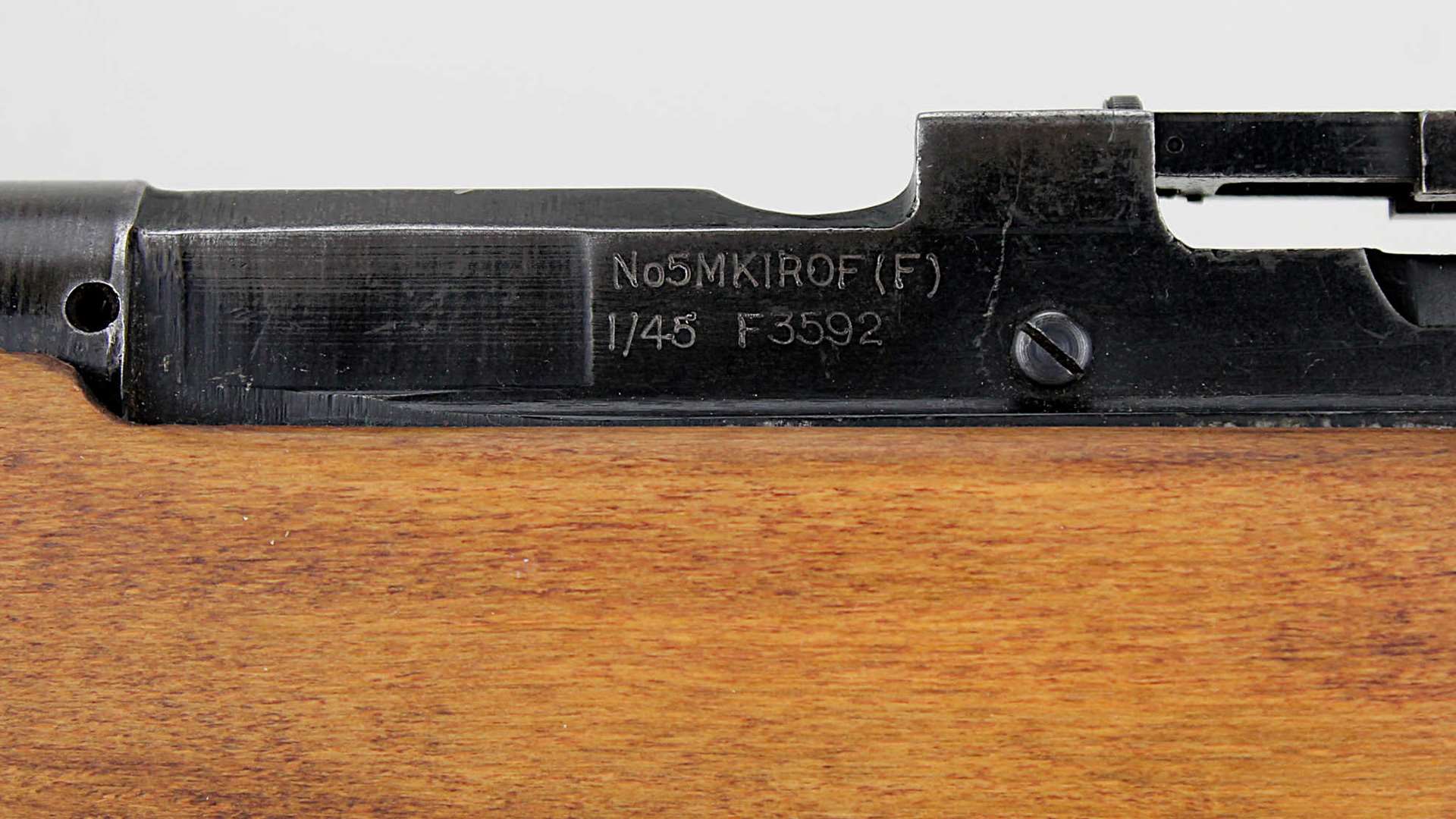
Receiver electropencil markings identify this particular model No. 5 Mk. I as being manufactured at Royal Ordnance Factory Fazakerley (No5 Mk. IROF (F)) in January 1945 (1/45). The letter “F” preceding the serial number 3592 again IDs Fazakerley. No. 5 Mk. I rifle four-digit serial numbers ran sequentially from 0001 to 9999, with the prefix letter designating a new run of numbers. This then, is the 63,586th No. 5 Mk. I manufactured by Fazakerley. BSA Shirley No. 5 Mk. I serial numbers bear two-letter prefixes all beginning with the letter “B.”
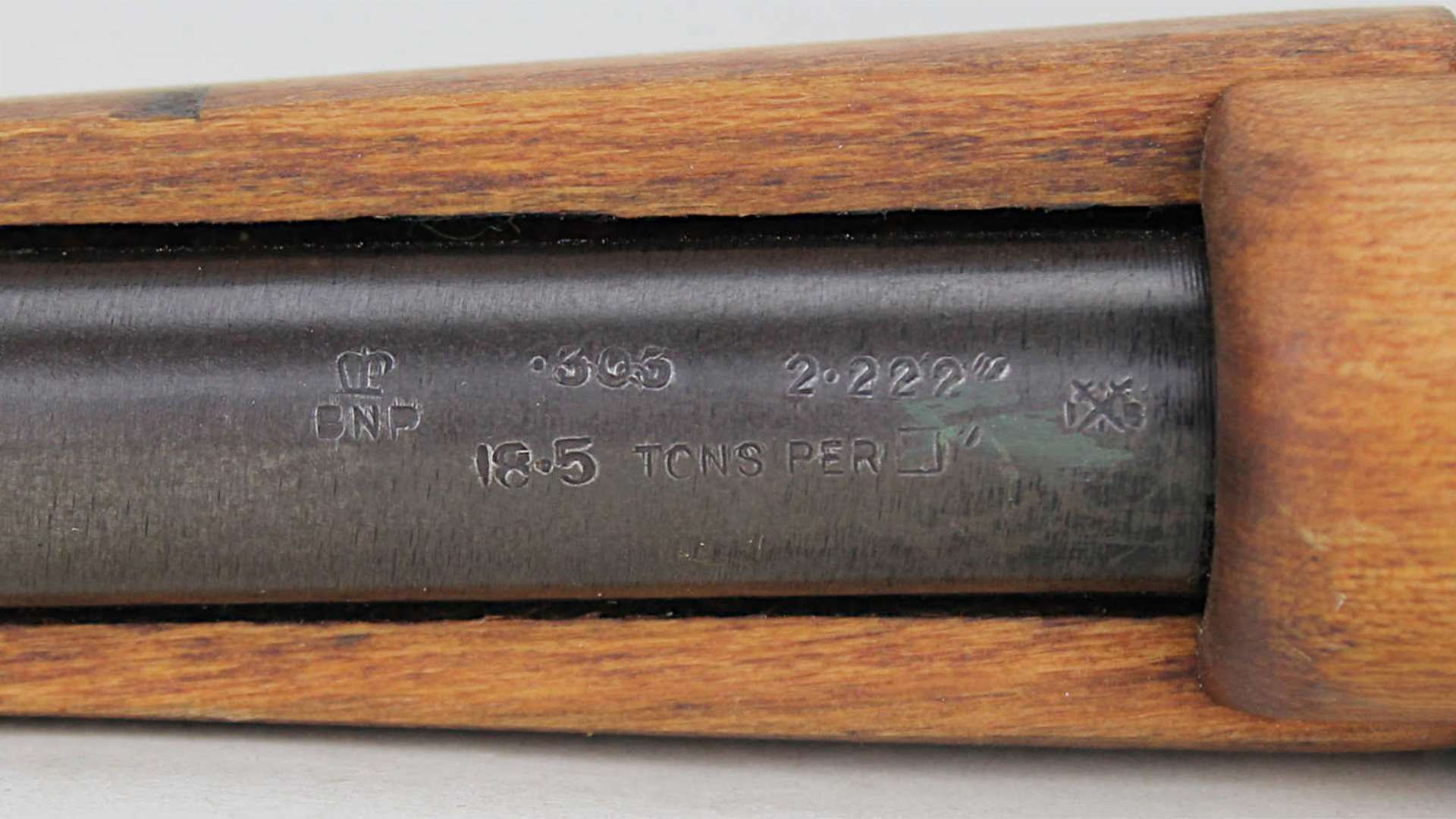
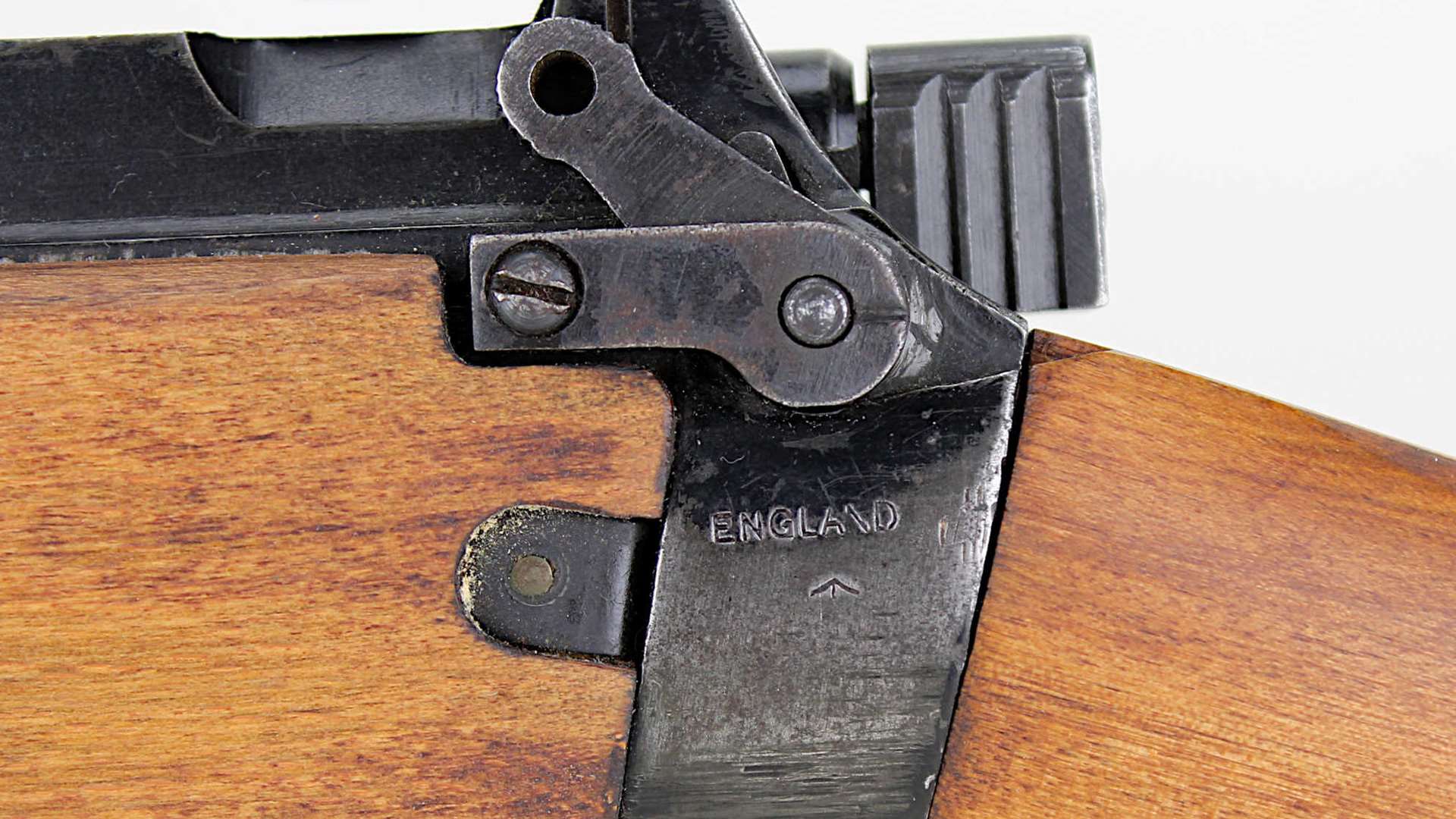
Barrel stamps on this specimen indicate cartridge (.303), cartridge case length (2.222 inches), and service pressure in long tons p.s.i. (18.5 tons per ם”). The crown-over-BNP is the Birmingham proof mark. The crossed swords indicate the British military retired the rifle to the commercial trade; the letters to left and right of the swords indicate the month and year of retirement, and below is the inspector’s number, but all three figures are, unfortunately, indecipherable. The receiver buttstock band bears “ENGLAND” and the government property broad arrow stamp. There are no importer marks.
REDUCING BARK AND BITE
Certainly, by 1943 when the need for a short rifle was put forward, it was far too late in the war for the British to design and field an entirely new model. Chopping an existing rifle was a matter of expediency. Though recoil, and to some extent muzzle blast, of the No. 5 Mk. I is noticeably greater than that of the No. 1 and No. 4 Enfield rifles when firing the .303 British service cartridge, the British Army felt it was acceptable.
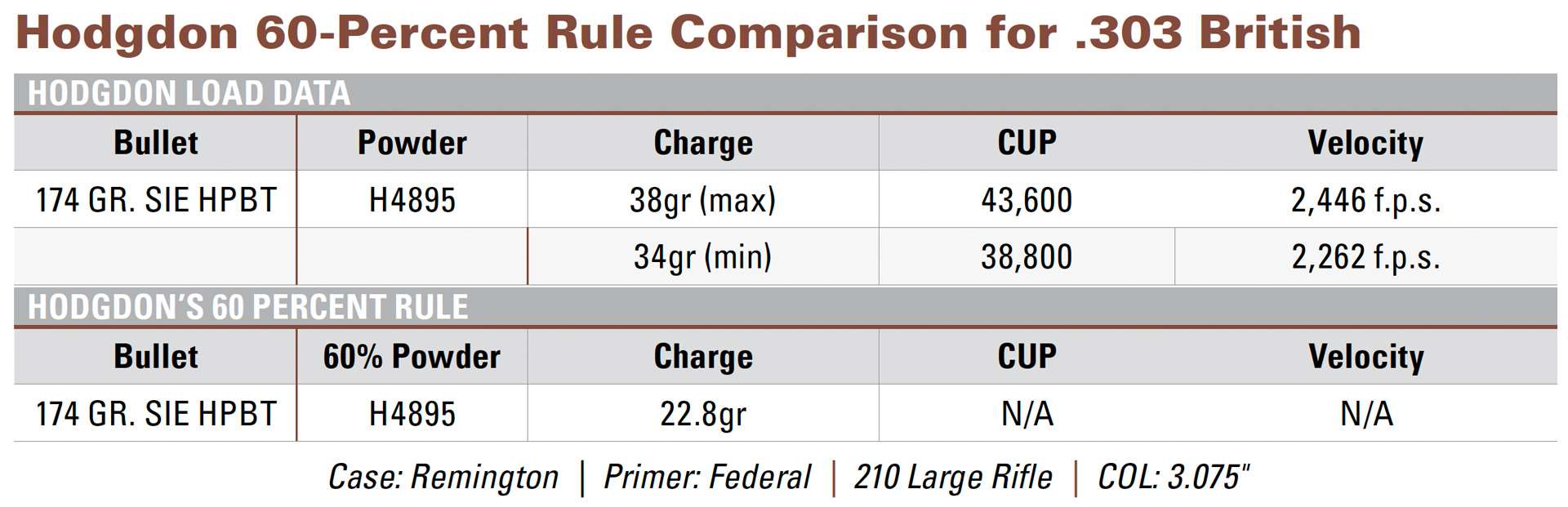
For recreational shooters who are handloaders, however, increased recoil is optional. While one might settle on making up the minimum or starting .303 British loads found in loading manuals, there is a method for safely reducing loads even further, Hodgdon’s “60-percent rule” for H4895 powder. The rule is to note the maximum load of H4895 for a given bullet listed in a load manual or online at Hodgdon’s Load Data Center and then multiply it by 0.6 (60 percent). Note that the 60-percent rule applies only to H4895 and that no other powder, including IMR 4895, can be substituted—doing so could be dangerous.
For the .303 British cartridge, both Hodgdon and Lee, for example, list with the 174-grain Sierra HPBT bullet a maximum H4895 load of 38 grains of powder. Multiplied by 0.6, the “60-percent rule” reduced load becomes 22.8 grains of H4895. This is considerably less than even the minimum/starting listed load of 34 grains of H4895, and will result in less recoil. Of course, this reduced load can also be applied to No. 1 and No. 4 Enfield rifles firing the same .303 British cartridge. And reducing .308 Win./7.62x51 NATO for the commercial #7 Jungle Carbine is also doable with the 60-percent rule, which we covered in greater depth for the so-chambered Ishapore 2A1 “Ishpaore Enfield.”
WANDERING ZERO
Competitors who would shoot the No. 5 Mk. I “jungle carbine” in Vintage Military Rifle games should know that the British Army claimed the rifle suffered a problem called a “wandering zero,” the shifting of bullet impacts away from sight settings. The lightening cuts in the No. 5 Mk. I’s receiver were conjectured as the culprit, but the British retired the No. 5 Mk. I as obsolete in 1947 before resolving the problem. Interestingly, it appears that few, if any, recreational shooters have reported a wandering zero with their milsurp No. 5 Mk. I rifles. Whether that wandering zero may apply to commercial versions of the “jungle carbine” is a matter for shooters of those rifles to discover for themselves.