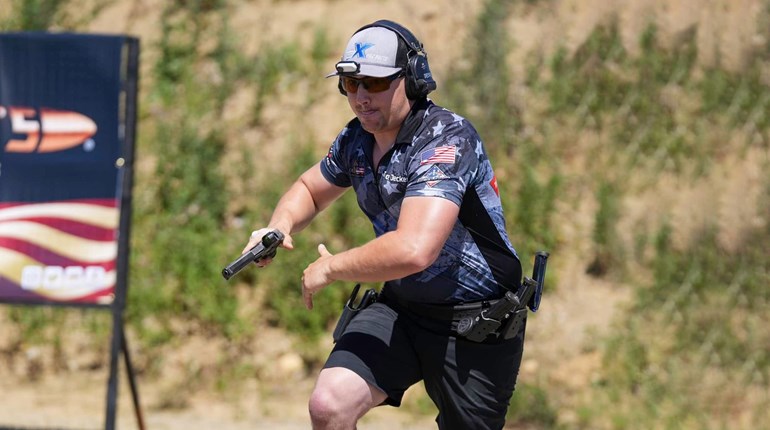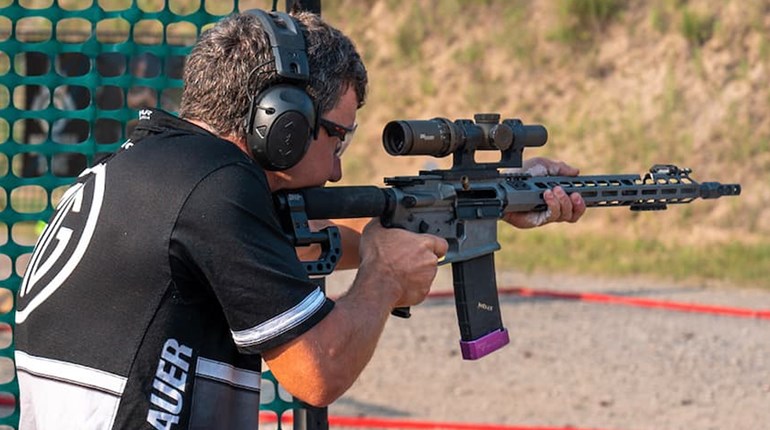
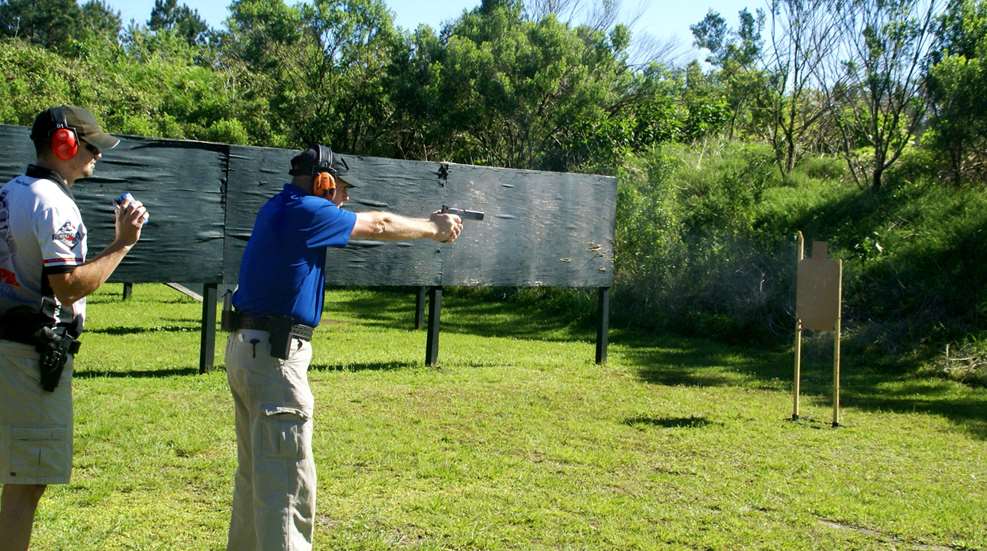
The scoring system used by the United States Practical Shooting Association (USPSA) is a bit more complex than that used by other action shooting organizations. That’s understandable, since their courses of fire are often longer and more complex.
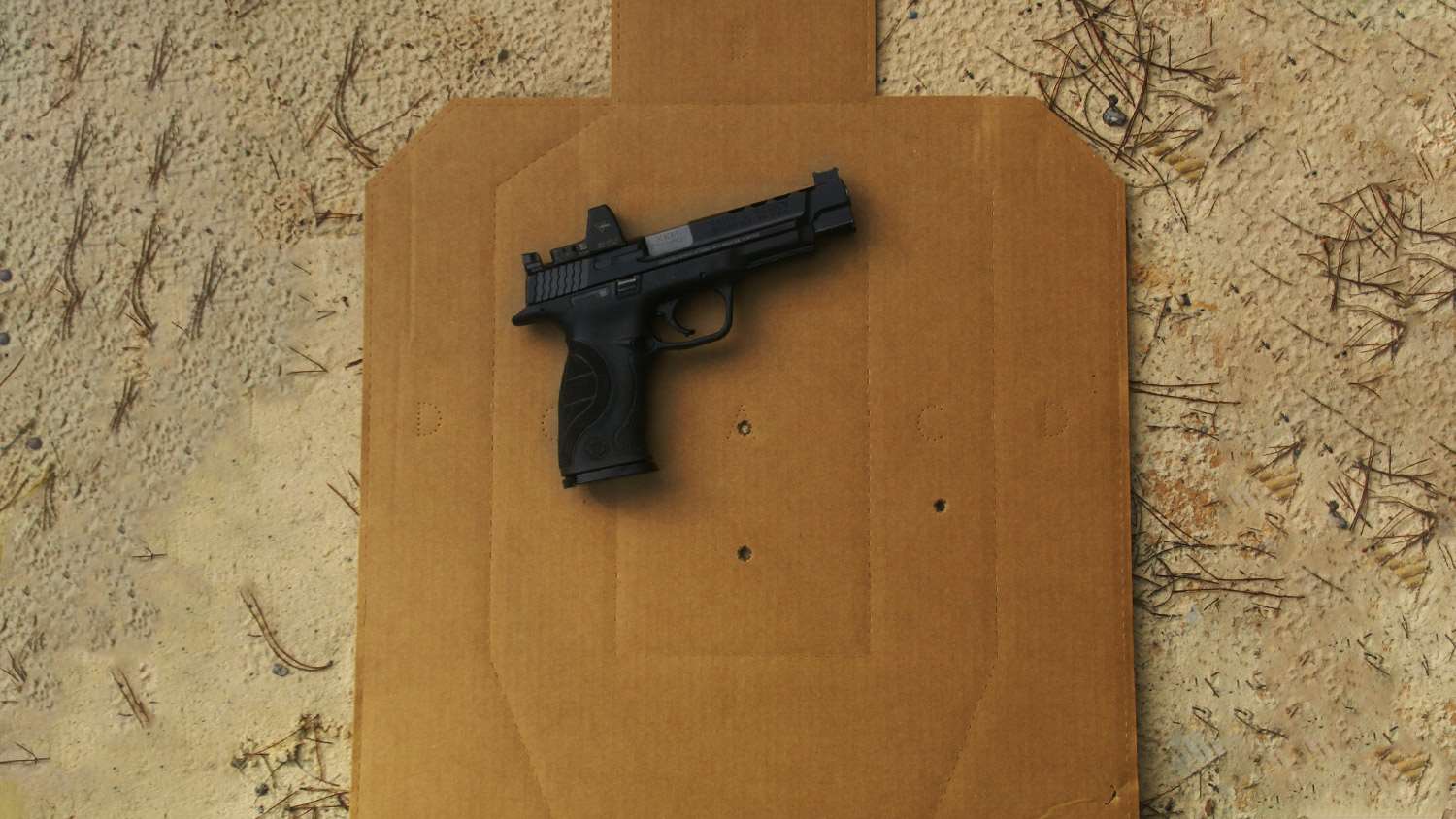
The USPSA scoring system will stipulate the number of scoring hits to be recorded on each paper target, as well as the point value of steel targets. The points awarded per paper target depends upon the scoring zone hit on the target, and whether made by a Major or Minor caliber. The highest value scoring hits are recorded to provide a point total for the stage. That point total, minus Procedural Penalty points, is then divided by the shooter’s time through the stage to arrive at a Hit Factor (HF). The highest HF wins.
Procedural Penalties are given for shooter infractions, such as shooting from the wrong position, and (Rule 10.1.1) will be twice the value of a single maximum available hit on a cardboard target. On the standard USPSA target, an A Zone hit is the maximum value on the target for both Major and Minor, and is 5 points. Procedural penalties are therefore normally 10 points each. Penalty points are subtracted from the shooter's stage point total before they are divided by time to arrive at the HF.
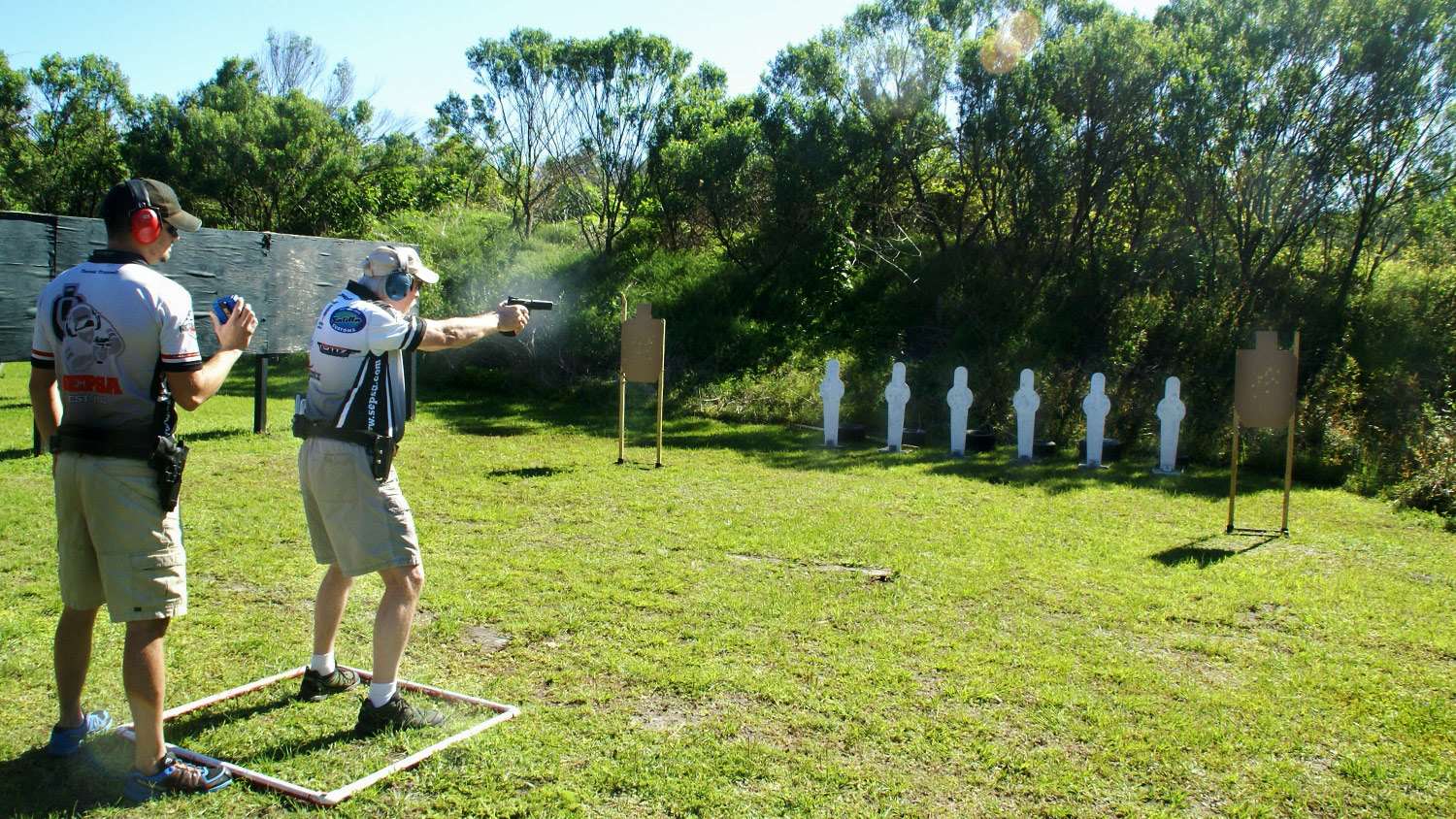
Making the scoring more complex is the fact that two different scoring systems can be used: Comstock or Virginia Count.
The same stage points, minus penalty points, divided by time to achieve a HF system is used for both. But Virginia Count scoring adds a new wrinkle. Under Comstock scoring a shooter may fire as many rounds at a target as they wish in order to achieve the maximum point value for the stipulated number of scoring hits. Not so in Virginia Count.
Virginia Count scoring dictates the specific number of rounds that may be fired during the stage.
It differs significantly from Comstock scoring in that each additional round fired in excess of the specified number will (Rule 9.4.5.1) result in a Procedural Penalty. In addition, each extra round hitting a target in the scoring zone (Rule 9.4.5.2) will result in an additional Procedural Penalty. Hardcover and No Shoot targets are not considered scoring zones and hits on those will not be penalized. These new penalties are unique to Virginia Count.
While Comstock is the most commonly-used system, Virginia Count will crop up. However, it is limited in its application. It can only be used for Short Courses (12-rounds minimum), Classifiers, Standards, and Speed Shoots. In addition, it can only be used for paper targets, and not when any steel targets are used in the stage. The scoring system used—Comstock or Virginia Count—will be announced during the stage briefing. For those not paying attention, the results can be disappointing.
For example: A 12-minimum round count Short Course with six paper targets. The two highest scoring hits on each target are recorded. The targets are set in two arrays of three targets with a short run between two shooting positions. A Zone hits count five points each for a maximum stage total of 60 points. This is an allowable stage for both Comstock and Virginia Count scoring to be used.
Shooter A runs through the stage in 8.7 seconds, firing only 12 rounds and scoring two Alpha hits per target for a 60-point maximum score. Shooter B flies through the stage in the same 8.7 seconds, but fires an extra round on two targets, one of which hits the scoring portion of the target for a third bullet hole. His six targets have the same two Alpha hits each as Shooter A, and with the same recorded time. Under Comstock scoring they tie the stage—60 points divided by 8.7 seconds gives each a 6.89 HF.
However, if the scoring is Virginia Count with only 12 rounds allowed per the stage, things change. Shooter A, only firing 12 rounds, keeps the 6.89 HF. But, things get very ugly for Shooter B.
The two extra rounds fired at the targets (as determined by the RO) make 14 rounds total on a 12-round stage. They earn Shooter B 10 penalty points each. One of the extra rounds missed the target, but the other struck the scoring portion of the target—not Hardcover or a No Shoot. That made 13 scoring hits on targets instead of the 12 hits allowed and is an additional 10-point penalty. The 30 penalty points are subtracted from the 60 stage points acquired, leaving Shooter B with 30 stage points—30 divided by 8.7 results in a 3.44 HF. Those two extra shots cut Shooter B’s score to half of Shooter A’s—despite the same time and point count—just because of two careless extra trigger pulls.
It pays to listen to the stage briefing. When the RO starts talking about Comstock and Virginia, they’re not discussing geography.
Read more articles by Chris Christian:
- Review: Ruger Super GP-100
- Rimfire Rifles and Steel
- Review: SIG Romeo1 Pro
- Conquering Cataracts
- Review: Lapua 9mm 123-grain FMJ
- 5 Tips To Help You Win Trophies With A Revolver
- Review: Smith & Wesson M&P 15-22 Sport OR with Optic
- Spend Your Time Wisely: Economy Of Motion In Action Shooting
- Review: Federal Syntech PCC 9mm 130-Grain
- Wringing Out CCI’s New Clean-22 Rimfire Loads